
By Symeon Missios, MD — Long Island Brain & Spine
A man in his mid-forties walks into my office moving carefully, the way people do when they have learned that certain motions cost them dearly. He sits down with effort. He tells me he has had what he calls “sciatica” for about ten weeks. It started, he thinks, after a long day moving furniture. It runs from his lower back down the back of his right thigh, past the knee, into his calf, and ends in a deep, electric ache along the outside of his foot. Some days it is bearable. Some days it wakes him up at 3 a.m. He looks at me with the question every patient with this problem eventually asks.
“Doctor — is this a surgical problem?”
The honest answer is: usually not, sometimes yes, and the difference matters. Sciatica is one of the most common reasons a person ends up in a neurosurgeon’s office. It is also one of the conditions where the right answer is most often not surgery — at least not yet, and sometimes not ever. Here is the framework I walk through with these patients.
What Sciatica Actually Is
The word sciatica is a description, not a diagnosis. It refers to pain that radiates along the path of the sciatic nerve or one of the nerve roots that contribute to it — most commonly down the back of the leg, sometimes into the foot. The pain is often described as sharp, electric, burning, or deep. It is usually felt in the leg more than in the back, which is why patients sometimes do not connect it to a spine problem at all.
The sciatic nerve itself is a large nerve in the buttock and thigh, but the vast majority of “sciatica” does not start at the nerve. It starts where the nerve roots exit the spine in the lumbar region — usually L4, L5, or S1 — and gets pinched at that exit. The pinch sends a signal that the brain interprets as coming from the entire territory of that nerve root, which is why the pain is felt in the leg, not where the actual problem is.
This is a critical reframe for patients: your leg is not the problem. Your back is the problem. Your leg is the messenger.
Why It Does Not Always Feel Like Back Pain
Many patients with classic sciatica have minimal back pain. They sometimes resist a spine evaluation because “my back doesn’t really hurt — it’s my leg.” But this is exactly what nerve root compression does. The compressed nerve fires aberrantly all along its course. The most painful, attention-grabbing portion is the leg, even though the mechanical problem is in the spine.
This pattern — leg pain greater than back pain, with the leg pain following a specific anatomical distribution — is one of the strongest clinical signals that the problem is genuinely a nerve root, not a soft-tissue issue.
What’s Causing It
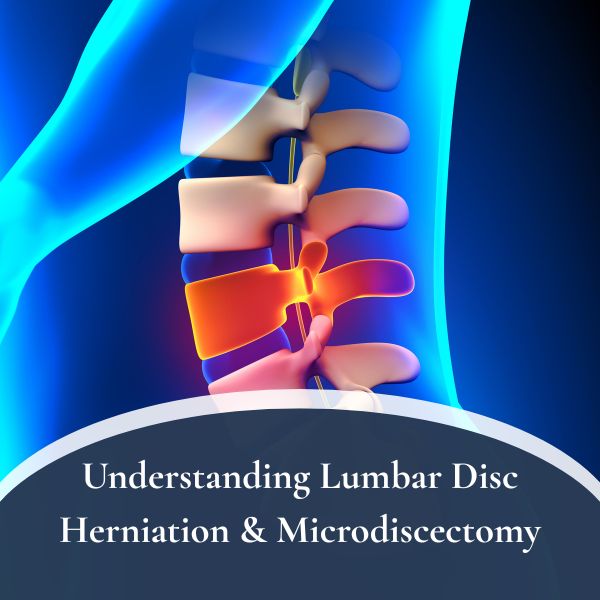
In adults under about 50, the most common cause is a herniated lumbar disc. The intervertebral discs are cushions between the vertebrae. When the soft inner material pushes through a tear in the tougher outer ring and compresses an adjacent nerve root, the result is classic sciatica.
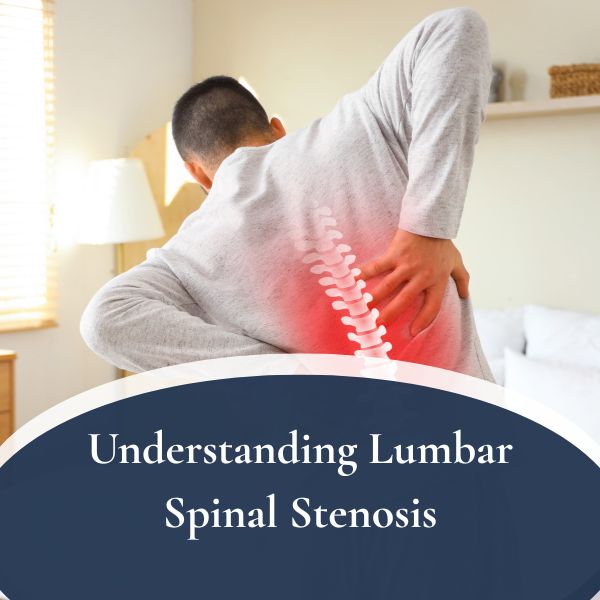
In adults over about 50, the more common cause is lumbar spinal stenosis — gradual narrowing of the spinal canal or the nerve root tunnels from age-related changes, arthritis, ligament thickening, and bone spurs. Stenosis produces a different pattern: pain or heaviness in the legs that comes on with standing or walking and is relieved by sitting or leaning forward.
Less common causes worth mentioning because they sometimes get missed:
- Spondylolisthesis — when one vertebra slips forward relative to the one below it, narrowing the nerve tunnels
- Synovial cysts from arthritic facet joints, compressing a nerve root
- Tumors of the spinal canal or surrounding bone — rare, but the reason persistent or atypical sciatica deserves imaging at some point
- Infection (epidural abscess, discitis) — uncommon, but emergencies when they occur
The pattern of pain, the patient’s age, the time course, and what makes it better or worse usually tell me which of these is most likely before any imaging is done.
Conservative Care: What Actually Works
Here is the part that surprises most patients. The natural history of a herniated lumbar disc, in most cases, is to get better on its own. Roughly 70 to 90 percent of patients with disc-related sciatica improve substantially within 6 to 12 weeks without surgery [1]. The herniated material itself often shrinks over time — sometimes dramatically — as the body resorbs it.
This is why the first line of treatment for uncomplicated sciatica is essentially: keep moving, manage pain, and give it time. The components that have decent evidence behind them:
- Stay reasonably active. Strict bed rest, once thought to help, actually makes outcomes worse [2]. Walking, even short distances, is better than sitting still.
- Anti-inflammatory medication when not contraindicated (NSAIDs are the workhorse).
- Physical therapy focused on nerve mobility, core strengthening, and postural retraining.
- Short courses of oral steroids in selected cases of severe radicular pain — modest benefit, but real for some patients.
- Epidural steroid injections for pain that is not improving after several weeks of conservative care. These do not change the natural history of the disc problem, but they can buy time and improve quality of life while the body does its own work.
What I tell patients in this window: you are not wasting time by being patient. You are letting the most likely outcome — spontaneous improvement — actually happen, while keeping the option of surgery on the table if it does not.
Red Flags That Change the Math
There are situations where the calculus shifts and a wait-and-see approach is no longer appropriate. These are the symptoms that warrant prompt imaging and, in some cases, urgent surgical evaluation:
- Progressive or significant motor weakness. A drop in strength — a foot that catches when walking, a leg that gives way going upstairs, inability to lift the front of the foot (“foot drop”).
- Cauda equina syndrome. A medical emergency. Suggested by new urinary retention or incontinence, loss of bowel control, numbness in the saddle area (the parts that would contact a bicycle seat), or severe bilateral leg weakness.
- Unrelenting pain that does not respond to any conservative measure and severely impairs function.
- Constitutional symptoms — fever, night sweats, unexplained weight loss — raising concern for infection or tumor.
- History of cancer in a patient with new severe back or leg pain.
- Significant trauma before symptoms began.
Any of these should trigger a call to the office, or in the case of suspected cauda equina, an emergency department visit. Cauda equina syndrome is a few-hour problem, not a few-week problem. Delays in decompression directly worsen outcomes.
When MRI Becomes Necessary
In the absence of red flags, MRI in the first six weeks rarely changes management. Most insurers will not cover it that early, and there is a reason: imaging an unselected population of adults shows disc bulges and herniations in many people with no pain at all [3]. Treating the picture rather than the patient is one of the easiest ways to end up with surgery that does not help.
I order MRI when:
- Conservative care has been tried for six weeks without meaningful improvement
- Red flags are present
- The pattern of symptoms does not match a simple radiculopathy and another diagnosis is suspected
- A patient is in genuine consideration for surgery and we need to confirm what is mechanically going on
Microdiscectomy: When Surgery Makes Sense
When a patient has a clear herniated disc, a matching pattern of leg pain, and either persistent disabling symptoms despite adequate conservative care or progressive neurological deficit, lumbar microdiscectomy is one of the better-studied and more reliable spine operations.
The procedure is straightforward in concept: through a small incision over the affected level, the surgeon removes the fragment of disc that is pressing on the nerve root. The disc itself is not “fixed” — the rest of it stays. The goal is targeted: relieve pressure on the nerve, which usually relieves the leg pain.
Microdiscectomy is typically an outpatient or overnight procedure. Most patients walk the same day. Most go home within 24 hours. Most are back to non-strenuous work within a few weeks. The relief of leg pain is often dramatic and immediate; back pain takes longer and may not improve as much.
The Spine Patient Outcomes Research Trial (SPORT) showed that for patients with severe sciatica from a herniated disc, those who had surgery experienced faster relief than those who continued conservative care — though by four years, both groups improved meaningfully [4]. The decision, then, is often less about whether you will eventually feel better and more about how much suffering you are willing to absorb in the meantime.
What Surgery Doesn’t Fix
A few honest caveats worth saying out loud:
- Microdiscectomy treats leg pain better than back pain. If the dominant complaint is axial low back pain rather than a nerve-root pattern, a disc operation may not change the picture much.
- The disc is not made new. The same disc level can re-herniate, although the rate of clinically significant re-herniation is in the single digits.
- Numbness can lag. Pain often improves quickly; numbness or weakness from long-standing nerve compression sometimes takes months to resolve and occasionally does not fully resolve.
- Surgery is for the right patient, not the right MRI. A herniated disc on imaging without a matching clinical picture is not a surgical indication. This is the central point of my earlier piece on when not to have spine surgery.
The Bottom Line
Sciatica is a description of leg pain caused by an irritated nerve root in the lumbar spine. Most of it gets better on its own within a few months. Most of the time, the right initial response is patience, movement, and pain control — not imaging, not procedures, and not surgery. The job of the spine specialist is partly to confirm what is going on, and partly to make sure that for the minority of patients whose problem is not going to resolve on its own — or whose pattern is no longer safe to watch — the right intervention happens at the right time.
If you have leg pain that has lasted more than a few weeks, is not improving, is severely limiting what you can do, or has any of the red flag features above, our offices in West Islip and Smithtown are here for evaluation. Bring any imaging you have had, including the disc, not just the report. For comprehensive spine care across the practice, you can also reach Long Island Brain & Spine at longislandbrainandspine.com.
Dr. Symeon Missios is a board-certified neurosurgeon practicing on Long Island, with expertise in brain and spine surgery, cerebrovascular disease, and stereotactic radiosurgery. To schedule a consultation or second opinion, request an appointment or call (631) 422-5371 or toll-free (888) 737-5427.
References
- Vroomen PC, de Krom MC, Slofstra PD, Knottnerus JA. Conservative treatment of sciatica: a systematic review. J Spinal Disord. 2000;13(6):463–469. PubMed: 11132976
- Vroomen PC, de Krom MC, Wilmink JT, Kester AD, Knottnerus JA. Lack of effectiveness of bed rest for sciatica. N Engl J Med. 1999;340(6):418–423. doi:10.1056/NEJM199902113400602
- Jensen MC, Brant-Zawadzki MN, Obuchowski N, Modic MT, Malkasian D, Ross JS. Magnetic resonance imaging of the lumbar spine in people without back pain. N Engl J Med. 1994;331(2):69–73. doi:10.1056/NEJM199407143310201
- Weinstein JN, Lurie JD, Tosteson TD, et al. Surgical versus nonoperative treatment for lumbar disc herniation: four-year results for the Spine Patient Outcomes Research Trial (SPORT). Spine. 2008;33(25):2789–2800. doi:10.1097/BRS.0b013e31818ed8f4