Brain Tumor Treatment In Bay Shore
Brain tumors are a serious health concern and can cause significant damage to the brain and nervous system. Despite extensive research, the exact cause of brain tumors is not yet fully understood. However, there are several risk factors that have been identified. To learn more, contact Dr. Symeon Missios, MD, FAANS, brain tumor treatment in Bay Shore.
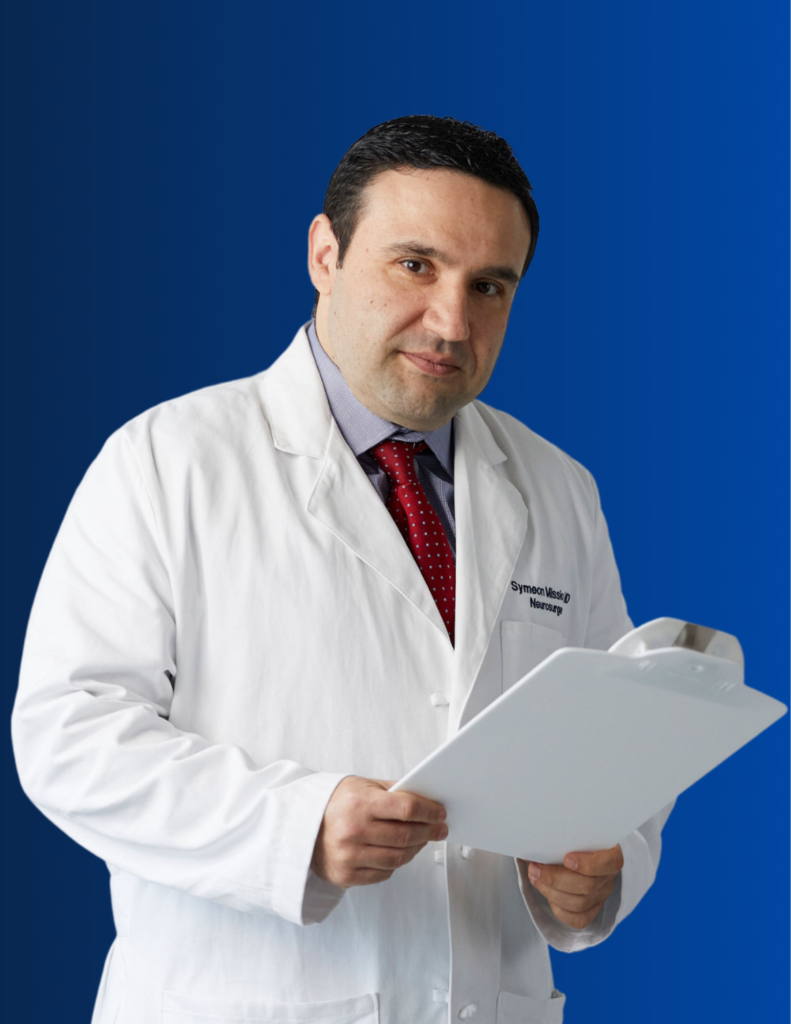
Academic Excellence & Subspecialty Training
Dr. Missios graduated Magna Cum Laude from Duquesne University and earned his medical degree from Dartmouth Medical School, where he received the prestigious Dean’s Medal Award for the highest academic achievement in his class.
Cleveland Clinic Fellowship
Neurosurgical Oncology and Stereotactic Radiosurgery subspecialty training.
Thomas Jefferson University
Fellowship in Endovascular Neurosurgery and Neurovascular Critical Care.
His clinical expertise involves advanced intraoperative neuronavigation techniques such as brain mapping and electrocorticography.
Affiliated with
The only Joint Commission Certified Comprehensive Stroke Center on Long Island’s South Shore.
Types of Brain Tumors
Brain Tumors
A brain tumor is an abnormal collection of cells in the brain, in which the cells divide and grow uncontrollably leading to an abnormal mass of tissue.
- Headache
- Numbness
- Speech Difficulties
- Visual Deficits
Primary Tumors
These are tumors that arise from the brain itself and specifically from the support cells of the brain, the glia and not the nerve cells themselves
- Surgery
- Radiation Therapy
- Chemotherapy
- Targeted Therapy
Pituitary Tumors
Tumors of the pituitary are in their majority benign. They cause symptoms due to hormonal abnormalities or compression of the nerves that go to the eyes
- Medications
- Surgery
- Radiation Therapy
- Hormone Replacement
What Is Brain Surgery?
Brain surgery, or cranial neurosurgery, refers to any operation performed on the brain, its surrounding membranes (the meninges), the blood vessels that supply it, or the bony skull that protects it. Today, the vast majority of operations are performed through small, carefully planned openings using image guidance, intraoperative neuromonitoring, and microsurgical technique — preserving as much healthy tissue and function as possible.
- Before Surgery
Detailed neurological exam, MRI/CT imaging, and medical clearance. Dr. Missios discusses diagnosis, risks, benefits, and non-surgical alternatives. - During Surgery
During Surgery Performed under general anesthesia in specialized suites. Length varies from under 2 hours for shunts to full-day complex skull base cases. - Recovery
Typically one night in Neuro ICU. Hospital stays range 2-7 days. Full recovery often takes 6-12 weeks with coordinated physical and occupational therapy.
Types of Brain Surgery
Dr. Missios performs several types of procedures for brain tumors.
- Craniotomy
A precisely planned section of bone is temporarily removed to access the brain, then replaced and secured with titanium plates. Used for tumors, aneurysms, and hematomas. - Minimally Invasive
Keyhole and endoscopic techniques, such as endonasal surgery for pituitary tumors, avoiding external incisions for faster recovery and less pain. - Awake Craniotomy
Used for lesions near speech or motor centers. Allows real-time mapping of critical functions while the patient is comfortable and awake during sensitive portions. - Image-Guided Surgery
GPS-like neuronavigation, MRI tractography for white matter tracts, and 5-ALA fluorescence to make malignant tumors glow for safer resection.
Brain Tumor FAQs
Is brain surgery always necessary for a brain tumor?
No. Many small, slow-growing tumors especially benign meningiomas and certain pituitary adenomas — can be safely monitored with serial MRI scans, treated with stereotactic radiosurgery, or managed medically. Dr. Missios will discuss all reasonable options with you before recommending surgery.
How long does it take to recover from brain surgery?
Recovery depends on the procedure, your overall health, and the location of the surgery. Most patients are discharged within a week and return to light activity within two to four weeks. Full neurological recovery and return to work often take six to twelve weeks, though some patients recover faster.
Will I be able to think and function normally after brain surgery?
Preserving neurological function is the central goal of every operation we perform. With modern image guidance, neuromonitoring, and awake mapping when needed, most patients return to their baseline cognitive function. We discuss specific risks tied to your individual case during consultation.
Do you accept insurance for brain surgery?
Yes. We accept most major insurance plans. Our office staff can verify your coverage and help you understand what to expect financially before scheduling.
Talk it through with Dr. Missios.
New diagnosis, second opinion or referral: we will get you seen quickly and walk you through each step.
380 Montauk Highway, West Islip, NY 11795Directions →
48 Route 25A, Suite 302, Smithtown, NY 11787Directions →
111 Beach Drive, West Islip, NY 11795Directions →