
Stereotactic radiosurgery · Overview
Stereotactic Radiosurgery
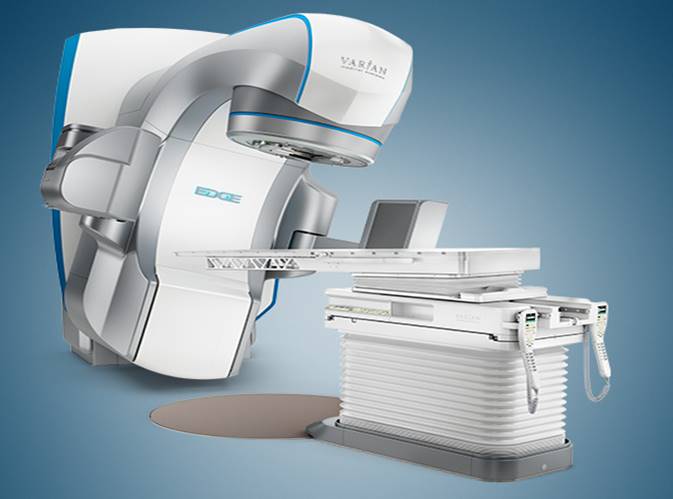
Stereotactic Radiosurgery is a minimally invasive technique for delivering high dose radiation in a single fraction without delivering significant radiation to healthy normal brain tissue
- It is a non-invasive, outpatient procedure which does not require general anesthesia
- It relies on the principle of multiple convergent beams of radiation to a single target point of choice within the brain or spine
- The target receives a high dose of radiation delivered in a highly conformal fashion while the surrounding normal brain tissue receives a very low dose
Steep radiation fall-off into the surrounding tissues limits toxicity and side effects - The patient is immobilized with a head frame or a facemask and an MRI and a CT is performed to define the target in 3 dimensions
- An individualized treatment plan is developed to focus the radiation as precisely as possible
- Individual beams can be adapted to conform to irregular shapes and minimize damage to normal brain tissue
Conditions Treated:
Metastatic tumors
- Stereotactic Radiosurgery is highly effective for brain metastases
- Especially effective for smaller tumors
- Multiple tumors can be treated in the same setting
- Follow-up with an MRI every 3 months to assess the effectiveness of the treatment
Spine Tumors
- Stereotactic Radiosurgery can be applied to spine tumors as well
- Results in a more conformal plan which delivers a high dose of radiation to the tumor but limits the extent of radiation that normal tissues are exposed to
Meningiomas
- Smaller meningiomas that do not cause swelling or pressure in the brain can be treated with Stereotactic Radiosurgery
- The treatment works to prevent any further growth of the tumor
- Safe technique, typically only one treatment is required
- Highly effective at controlling tumor growth (90-95% 5 year control rates)
Trigeminal Neuralgia
- Stereotactic Radiosurgery is a minimally invasive treatment which can be used to alleviate pain for patients with trigeminal neuralgia
- Single outpatient treatment
- It results in reduction of the symptoms and improved quality of life
From the blog
Related reading

Radiosurgery for Multiple Brain Metastases: How Many Is Too Many?
A woman in her late fifties sits across from me with her husband.

Stereotactic Radiosurgery: The “Surgery” That Doesn’t Cut
A patient sits across from me in my office in West Islip. She has just been told she has a small meningioma near the base of her skull.

Everything You Need to Know About Stereotactic Radiosurgery
Stereotactic Radiosurgery (SRS) is a highly precise form of radiation therapy used to treat various neurological conditions, including brain tumors, arteriovenous malformations (AVMs), and trigeminal neuralgia.
Request a consultation
Talk it through with Dr. Missios.
New diagnosis, second opinion or referral: we will get you seen quickly and walk you through each step.
West IslipLong Island Brain & Spine
380 Montauk Highway, West Islip, NY 11795Directions →
380 Montauk Highway, West Islip, NY 11795Directions →
SmithtownSt. Catherine of Siena Medical Building
48 Route 25A, Suite 302, Smithtown, NY 11787Directions →
48 Route 25A, Suite 302, Smithtown, NY 11787Directions →
West IslipThe Cancer Institute at Good Samaritan
111 Beach Drive, West Islip, NY 11795Directions →
111 Beach Drive, West Islip, NY 11795Directions →