Expert Pain Management in St. James
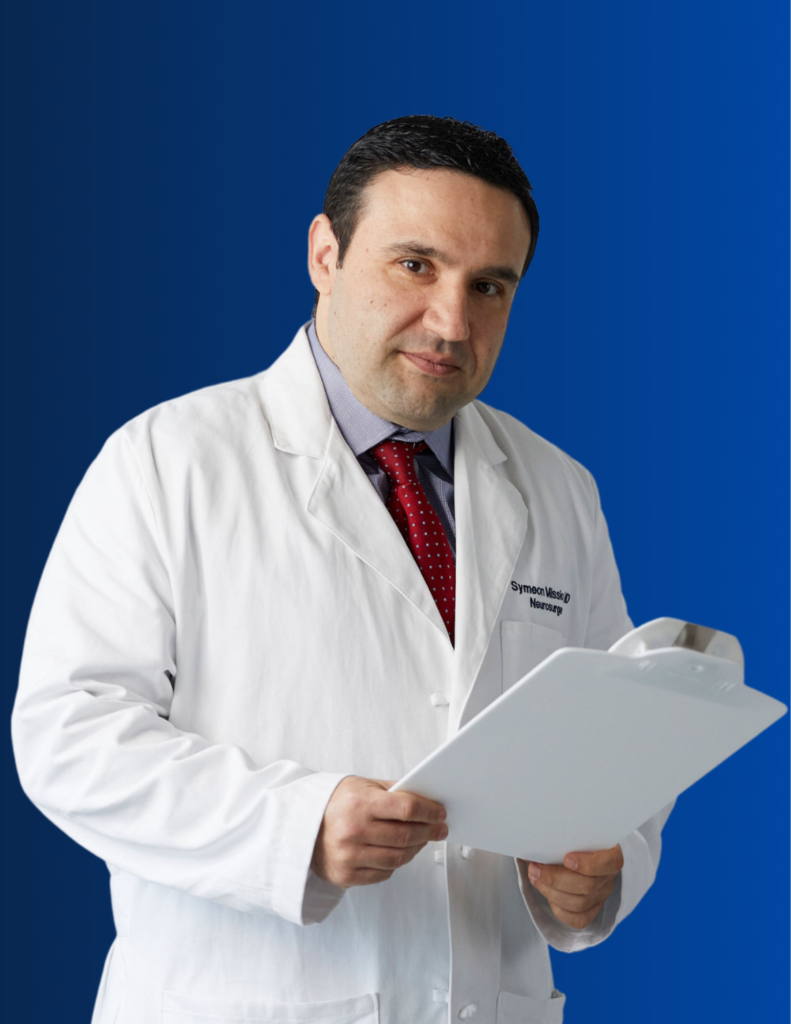
Dr. Symeon Missios is a board-certified neurosurgeon at Long Island Brain & Spine, specializing in personalized treatment plans to address the root cause of chronic pain and help you regain your quality of life.
Academic Excellence & Subspecialty Training
Dr. Missios graduated Magna Cum Laude from Duquesne University and earned his medical degree from Dartmouth Medical School, where he received the prestigious Dean’s Medal Award for the highest academic achievement in his class.
Cleveland Clinic Fellowship
Neurosurgical Oncology and Stereotactic Radiosurgery subspecialty training.
Thomas Jefferson University
Fellowship in Endovascular Neurosurgery and Neurovascular Critical Care.
His clinical expertise involves advanced intraoperative neuronavigation techniques such as brain mapping and electrocorticography.
Affiliated with
The only Joint Commission Certified Comprehensive Stroke Center on Long Island’s South Shore.
World-Class Pain Medicine Services
Comprehensive Pain Management
Specializing in interventional pain medicine for acute and chronic conditions. We strive to address the root cause of pain through physical medicine and neurological expertise.
- Back & Neck Pain
- Neurological Disorders
- Medication Management
- Interventional Procedures
Spine Surgery Consultations
Expert evaluations for complex spinal conditions. We offer compassionate care for those requiring minimally invasive procedures or orthopedic surgical interventions.
- Low Back Pain Treatment
- Minimally Invasive Options
- Second Opinions
- Surgical Planning
Personalized Treatment Plans
Every patient’s journey is unique. Our hallmarks include physical therapy integration, tailored lifestyle adjustments, and dedicated attentiveness to individual needs.
- Custom Exercise Plans
- Lifestyle Modification
- Emotional Support
- Coordinated Care
Treatment Options
The treatment for neurological pain involves treating the underlying symptoms. Some pain relief methods may be offered; however, the typical strategy is fixing the root problem. Here is a small list of treatments exclusively for neurological pain and not the underlying causes.
- Nerve Blockers
Steroid injections may be used to block nerves and prevent them from sending pain signals back to the brain. The main problem with this treatment method is that it’s temporary. - Anti Depression Drugs
This can treat the pain itself but also the depression and anxiety that it causes. - Anticonvulsant Drugs
It’s not entirely clear why this type of medication works. Yet it’s one of the more common treatments for neuropathic pain.
Neurological Pain Causes
The causes of this kind of pain are numerous and come from various sources. Listed below are a few of the most common sources of neurological pain:
- Diabetes
Chronic diabetes affects how your nerves function, which leads to a loss of feeling and then sudden shooting pains. It’s responsible for 30 percent of neurological pain cases. - Alcohol
Excessive drinking can cause both neurological damage and nerve damage, both of which can cause random unexplained pains. - Limb Loss
here is a condition known as phantom limb syndrome, which occurs after a limb has been amputated. Nerves near the severed limb misfire as the brain believes it’s receiving pain signals from the removed body part. - Spine Injuries
Even after the spine is treated and healed, there may have been permanent nerve damage that will cause pain. - Injuries
Severe injuries can cause damage to the nerves that may or may not heal. This permanent damage to the nervous system will lead to feeling pain where you were injured even years after the original incident.
Pain Management FAQ
What makes Dr. Missios different from other pain specialists?
As a board-certified neurosurgeon with dual fellowship training from Cleveland Clinic and Thomas Jefferson University, Dr. Missios brings a deep anatomical understanding of the nervous system and spine. This allows him to diagnose and treat complex pain conditions that others might miss.
Is chronic pain always physical?
Not always. We recognize ‘psychogenic’ or stress-induced pain, which can be linked to low levels of endorphins. Our approach integrates physical medicine with emotional support and stress-management techniques.
Do I need a referral for a spine surgery consultation?
While many patients are referred by their primary care doctors or neurologists, we also welcome self-referrals and those seeking a second opinion on their current treatment plan.
What symptoms of chronic pain should I look out for?
Key symptoms include persistent stiffness, aching, squeezing, stinging, and an inability to move affected joints. If these symptoms last more than a few weeks or follow an injury, professional evaluation is crucial.
Talk it through with Dr. Missios.
New diagnosis, second opinion or referral: we will get you seen quickly and walk you through each step.
380 Montauk Highway, West Islip, NY 11795Directions →
48 Route 25A, Suite 302, Smithtown, NY 11787Directions →
111 Beach Drive, West Islip, NY 11795Directions →