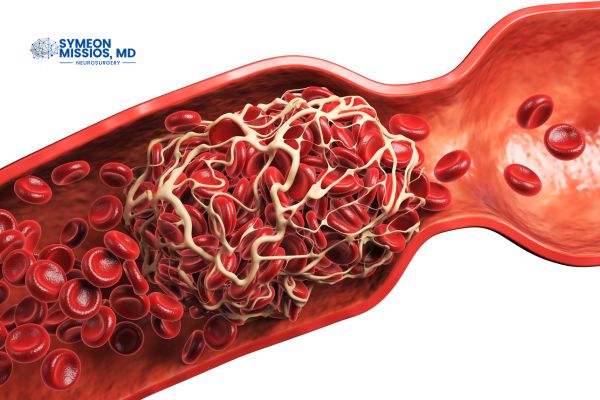
A dangerous narrowing of brain arteries that can develop in the days following a subarachnoid hemorrhage, most often from a ruptured aneurysm
Typically occurs between days 4 and 14 after the bleed, and can reduce blood flow enough to cause a delayed stroke
Patients recovering from aneurysm rupture are monitored closely in the neurocritical care unit so vasospasm can be detected early
Initial treatment includes medications and careful management of blood pressure and fluids
When severe, vasospasm is treated endovascularly with balloon angioplasty to reopen the narrowed artery or with medication infused directly into the affected vessel
Prompt recognition and treatment protect the brain during the most vulnerable period of recovery