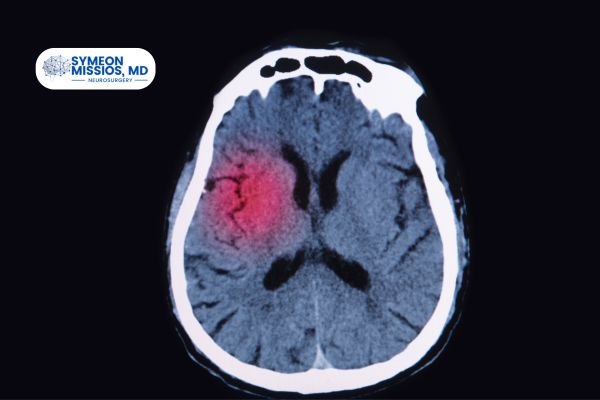
A weakened, ballooned area in the wall of a brain artery that carries a risk of rupture and bleeding around the brain (subarachnoid hemorrhage)
Many aneurysms are discovered incidentally on imaging and cause no symptoms; a ruptured aneurysm causes a sudden, severe headache and is a medical emergency
Treatment decisions are based on aneurysm size, shape, location, and patient factors — some small aneurysms are safely observed with serial imaging
Endovascular treatment is performed from inside the blood vessel through a small puncture in the wrist or groin, without opening the skull
Options include coil embolization, balloon- and stent-assisted coiling, and flow-diverting stents that redirect blood flow away from the aneurysm
Open surgical clipping remains the best option for certain aneurysms, and Dr. Missios offers both approaches, allowing the treatment to be matched to the aneurysm rather than the other way around